
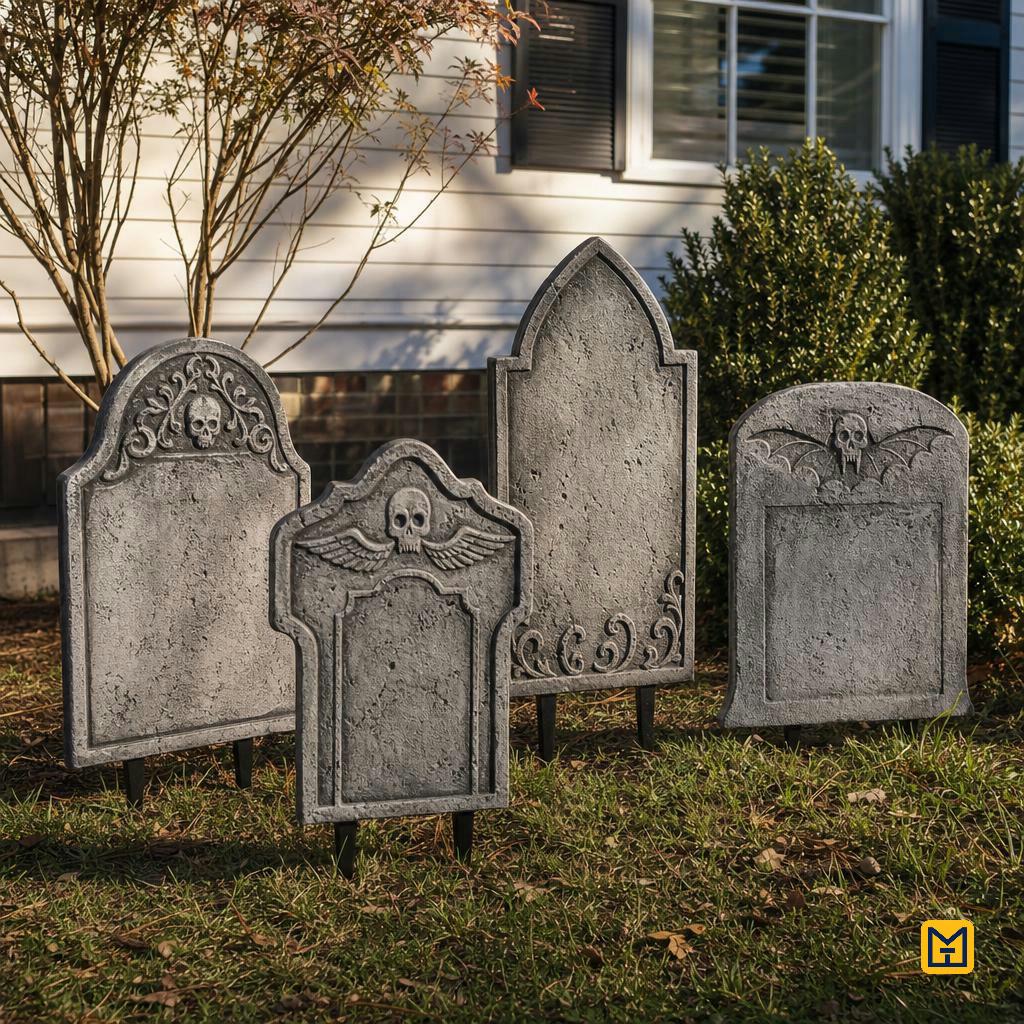
Weathered Gravestones Carved from Insulation Foam
by Makeit_official
A set of four gravestones cut from a single sheet of 50 mm insulation board, carved, sealed and painted to read as pitted limestone from the pavement, then staked properly so they stay where you put them. Two things decide whether this works: sealing the foam before any paint touches it, and anchoring boards that weigh almost nothing against a wind that does not.
Foam and coatings
Extruded or expanded polystyrene insulation board, 50 mm thick, 1200 x 600 mm (the stones)
2 sheets
12
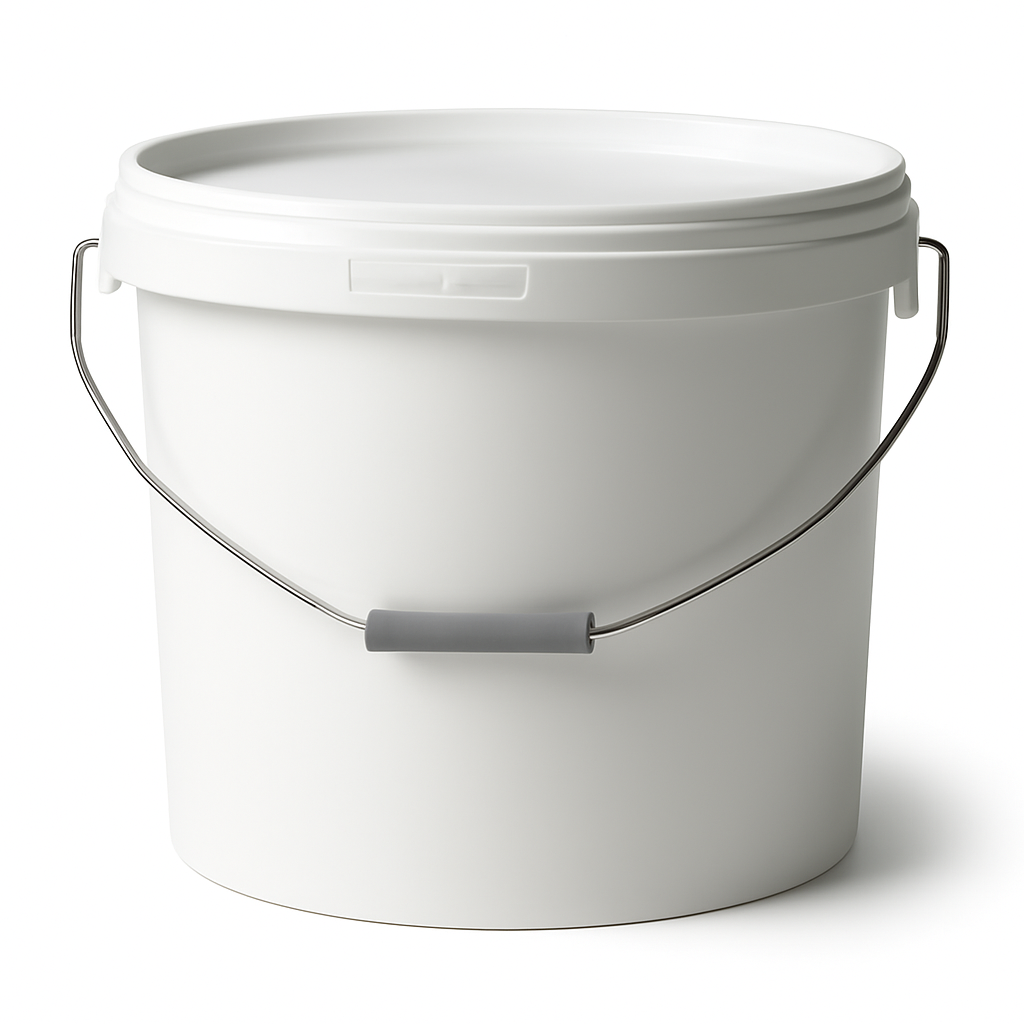
Exterior masonry paint, light grey or stone, matt (the sealing coat)
2.5 litres
18
Black and raw umber acrylic for the washes
250 ml of each
8
Off-white and pale green acrylic for dry-brushing and moss
120 ml of each
6
Water-based exterior varnish, matt
500 ml
10
Stakes and fixings
Steel ground rod or thick bamboo cane, 10-12 mm diameter (the anchors)
10 lengths of 500 mm (8 needed, 2 spare in case of splitting/mushrooming)
11
Foam-safe adhesive, solvent-free polyurethane or a foam-board grab adhesive
1 tube
7
Offcut of plastic conduit or garden hose, 15-20 mm bore
2 m
5
Rubber or plastic cane caps
8
3
Step 1 of 9
Set the sizes and buy the right board
Instructions
Work to about 450 mm wide by 700 mm tall for the main stones, with one taller at 900 mm as the centrepiece. Anything under about 500 mm tall reads as a garden ornament rather than a headstone. Buy 50 mm board. This is the dimension not to compromise on: it is thick enough to carve a letter into, rigid enough not to bow when staked, and deep enough that the edge looks like stone from the side. Either extruded or expanded polystyrene works. Extruded board is denser, carves more crisply and crumbles less; expanded is cheaper and makes far more mess. Never shape this material with heat. Do not use a soldering iron, a hot knife, a heat gun or a flame to melt detail into it. Burning polystyrene gives off styrene and a lot of dense black smoke, and it is genuinely nasty in a garage. Keep several offcuts bigger than a hand, from both sheets. You need them for testing the sealing paint in Step 4 and the adhesive in Step 6, and both tests are not optional — keep enough spare material that you are not tempted to skip a retest.
main stones 450 x 700 x 50 mm, one centrepiece at 900 mm tall
Tip
Cut all four stones from the sheets on the shop's cutting table if they offer it, or measure your car boot before buying 1200 mm sheets.
Swipe or use ← → keys
Want to follow this guide step by step or log your own build?
Open in the Makeit App